Nate has been refinishing hardwood floors in the Denver metro for more than two decades, and if there's one lesson that took him the longest to fully appreciate, it's this: wood doesn't behave the same way at 5,280 feet in a semi-arid climate as it does everywhere else in the country. Refinishing advice written for a humid Midwest basement or a coastal bungalow doesn't always translate here, and getting that wrong shows up as gaps, cupping, or a finish that fails early. This is what refinishing actually looks like when it's done right for a Front Range home.
Why Denver's Climate Changes the Job
Wood is hygroscopic - it absorbs and releases moisture depending on the air around it. Along the Front Range, relative humidity can swing from summer thunderstorm humidity spikes to bone-dry winter air pumped through a forced-air furnace, sometimes in the same week. That swing means wood is almost always either expanding or contracting slightly, and a refinishing job done without accounting for it can lock in stress that shows up months later as fine cracks in the finish or boards that don't sit flat. Before we sand a single board, we check moisture content with a meter rather than guessing - it's a five-minute step that prevents a much bigger problem down the line.
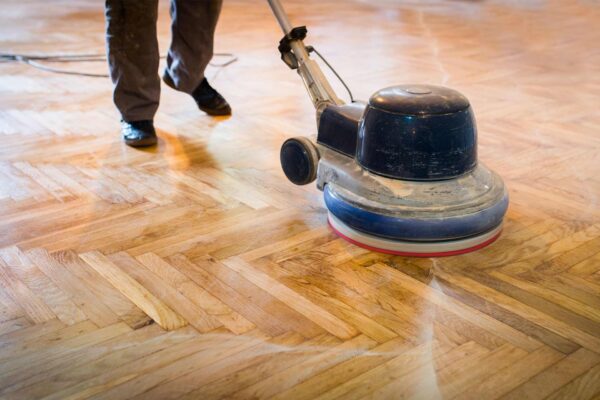
Dust-Contained Sanding
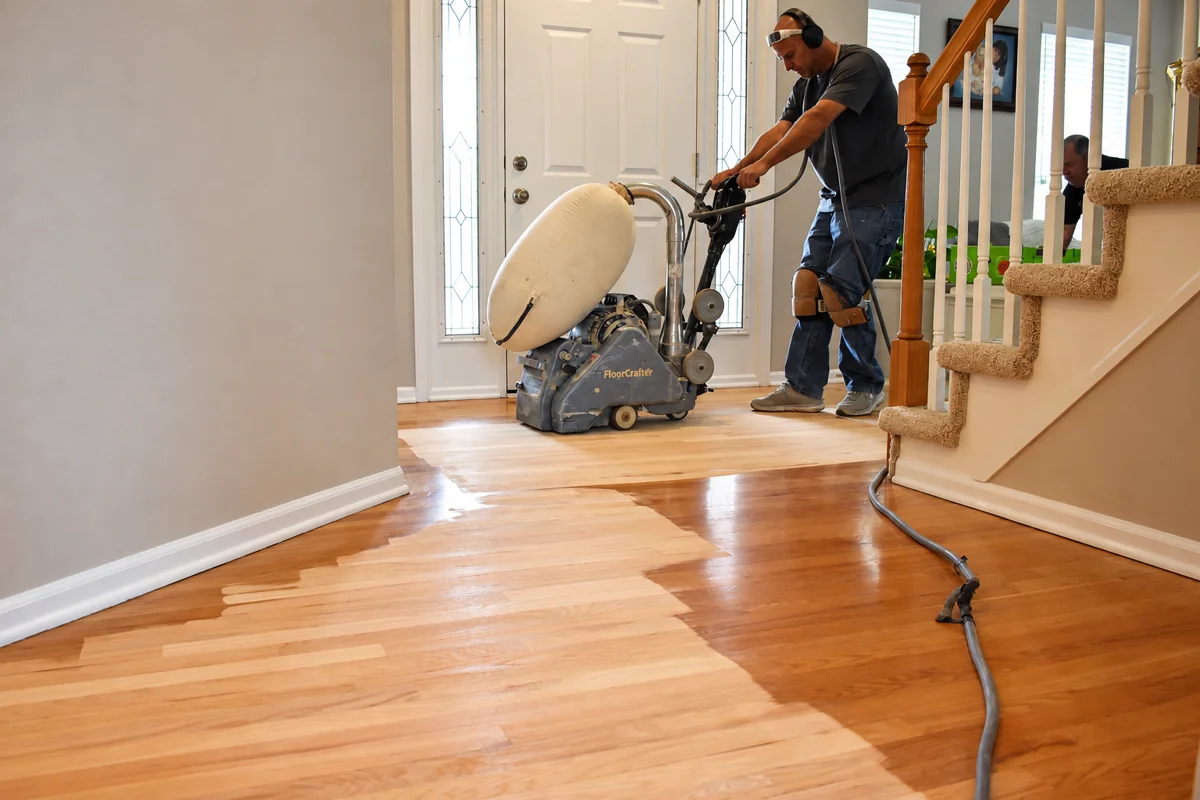
The old image of hardwood refinishing - a cloud of fine dust settling over every surface in the house for a week - isn't how the job needs to go anymore. We run a dust-containment system connected directly to the sander, capturing the vast majority of dust at the source instead of letting it spread through your HVAC system and into every room. That matters everywhere, but it matters more here, where dry air already means more airborne dust circulating in a typical Colorado home during winter months.
Timing Your Refinish for Colorado's Seasons
Refinishing can technically happen year-round with the right equipment, but shoulder seasons - spring before the summer heat and fall before the heating season kicks in hard - tend to give the most stable humidity conditions for finish curing. Summer's low afternoon humidity dries finish fast, which sounds good but can affect leveling if not managed by an experienced crew. Winter refinishing is doable, but running a furnace non-stop while a fresh finish cures needs to be handled carefully so the surface doesn't dry unevenly.
Choosing the Right Finish
Water-based polyurethanes have become the standard for good reason - low odor, fast cure, and a clear finish that won't amber your wood over time the way older oil-based products do. For homes with heavy foot traffic or dogs with long nails (common across Denver's dog-friendly neighborhoods), we often recommend a higher sheen commercial-grade finish or an extra coat for added durability. If your floors have deep gouges, pet stains, or boards that have cupped from past water exposure, it's worth reading up on when refinishing makes sense versus replacement before committing either way.
Curious if your floors are a good refinishing candidate?
Get a free in-home assessmentWhat the Process Looks Like
- Moisture check and full inspection of the existing floor for damage or repairs needed.
- Furniture moved and the room sealed off with plastic barriers beyond the dust-containment system.
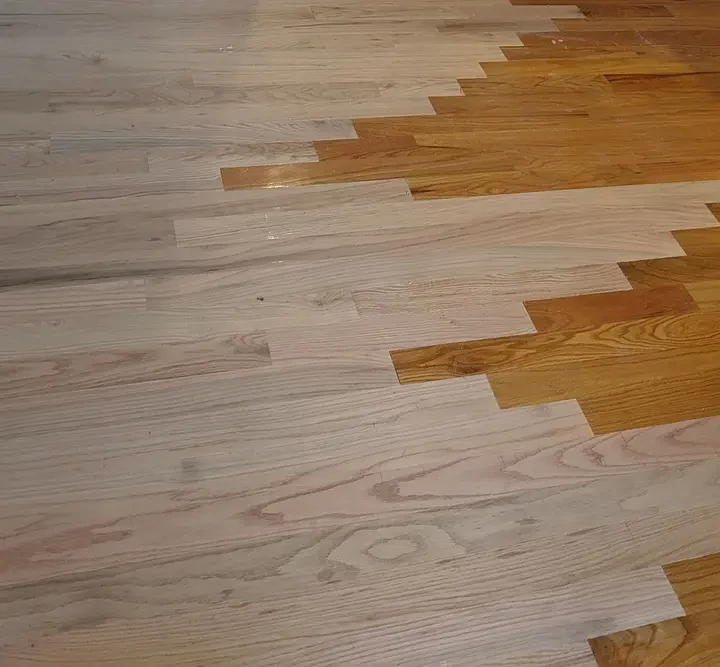
- Multiple passes of sanding to remove the old finish down to bare wood.
- Staining (if you're changing the color) followed by two to three coats of finish.
- A clear timeline for when each room is walkable versus fully cured for rugs and furniture.
Caring for a Freshly Refinished Floor
The first few weeks after a refinish matter more than most homeowners expect. Fresh finish continues curing to full hardness over several weeks even after it's walkable, so we recommend holding off on area rugs and felt furniture pads until the cure window has passed, and using soft-soled shoes rather than hard heels in the meantime. Because Denver's indoor air keeps swinging dry through the following winter, running a humidifier through that first heating season helps the new finish settle evenly rather than curing under stress from an especially dry room.
Why Experience Matters Here
This isn't a job where a general handyman with a rented sander gets the same result as a crew that's spent 20-plus years reading how Denver's climate specifically affects wood. Over-sanding, uneven stain absorption, and finish that fails within a year or two are the most common results of a rushed job. If your floors are original to an older Denver or Englewood home, they may have already been refinished once or twice - we'll tell you honestly how much wear is left before sanding becomes a bad idea. Compare refinishing against a full hardwood replacement, browse what our past clients say, or book a free assessment and we'll tell you straight which path makes sense for your floors.